
A Complete Review of Ancestry DNA
Are you trying to decide if you would like to do a DNA test with Ancestry? Here, find an honest, complete review of Ancestry DNA's testing service.

Are you trying to decide if you would like to do a DNA test with Ancestry? Here, find an honest, complete review of Ancestry DNA's testing service.


In this post, you will learn the pros and cons of DNA testing for ancestry. This information will help you come to a more informed decision about whether or not this type of DNA test is right for you. Are you on the fence about DNA testing? Are you wondering whether doing an autosomal DNA …

Do you see a new feature called "Ancestry Personal Discoveries Project" on your Ancestry DNA results summary page? In this post, you'll learn a little bit about the types of questions they ask in this project and how it might benefit you to answer them. I first noticed that they had added this feature to …

Do you have Mali in your ancestry DNA results? Are you wondering how you inherited this DNA ethnicity and which countries your ancestors might have come from? You have come to the right place. In this post, I'll answer these questions, as well give you some strategies for tracing your Mali ancestry. I decided to …

Are you confused by a DNA match? In this post, I'll go over some tips and strategies - ranging from the basic to the advanced - to help you figure out your connection. We all have that one match - trust me. Each time we log in to our results, we can't help but see …

Want to know how half-siblings show up on Ancestry DNA? I'll show you how to find out if your match is a half-sibling and so much more! Read more now!

If you have the Native American DNA ethnicity in your results, you probably want to learn more about it. In this post, you will learn why you have Native American DNA even if you weren't expecting it, as well as: Where is the Native American DNA ethnicity located? Many people read "Native American" and immediately …

You got your DNA results back, and you've taken a look through your DNA matches. Maybe you recognize some of the names from the top matches, and everything seems to make sense. There is more to see, however. In this post, I'll teach you how to analyze your DNA results using your DNA match list. …

If you got your DNA results back a while ago, you have probably already checked over your ethnicity estimate. You may have even looked through your first page or so of DNA matches, and everything seems in order. Everyone says that there is so much to learn from your DNA, but how do you really …

Most people aren't really expecting surprises when they do a DNA test, but almost everyone gets at least a small surprise - if they look hard enough at their results. Some people find out that they have different biological parents than they thought they did, others discover new close relatives, and others find out that …

When you are examining a DNA match, one of the best indicators of how far back your common ancestor might be is the size of your shared DNA segments. Generally, the common wisdom is that the longer the segment, the closer the relationship between you and your DNA match. In other words, the longer the …

If you are exploring your DNA results and find a new sibling, or are wondering if you and your known siblings share the expected amount of DNA, you have come to the right place. In this post, I'll tell you what you need to know about the number of shared DNA segments between siblings. How …

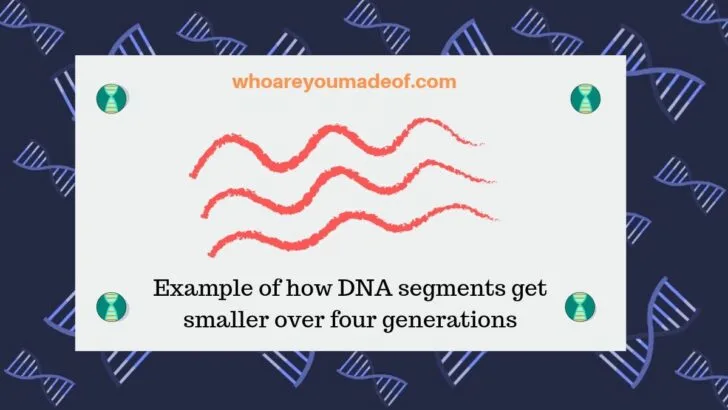
Want an example of how DNA segments get smaller over generations? Here, see how a segment breaks up over time, and how this affects your DNA match list.

The best way to figure out how you are related to a DNA match is to build a basic family tree for them back to your common ancestor. In this post, learn why this works and how to do it. I know that this sounds like a crazy idea. You have enough work on your …

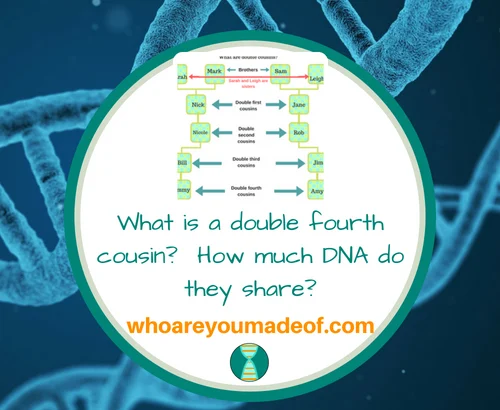
What is a double-fourth cousin, and how are they related? Do double-fourth cousins share more DNA with each other than they would otherwise? In this post, I'll explain the meaning of a double-fourth cousin, show you an example of my own double-fourth cousin, and talk about how this "double" relationship affects the amount of DNA …


(Note: to read about which grandparent you might be more related to, click here: Which Grandparent Are You Most Related To?) Congratulations on purchasing your DNA test! While you are waiting for your test to arrive or for your results to come back, there are some important steps that you can take to make sure …

Are you wondering what to expect from your DNA ethnicity estimate? Perhaps you are trying to determine which company offers the most detailed, or most accurate ethnicity estimate. In this post, I will show you my complete ethnicity results from Ancestry DNA, 23 and Me, Family Tree DNA, and My Heritage DNA. My sincere hope …

If you discover a secret through DNA testing, should you keep the secret, or should you expose it? What you decide to do is up to you, but you will get some ideas and guidance in this post. Most people get interested in DNA testing to find out where their family came from. Basically, they …

Want a way to use your unique DNA to find biological family connections? You can use DNA testing to find relatives, and I'll tell you exactly how to do it.

Why don't I have an ethnicity that my parent has? How is this possible? Does it mean DNA results aren't real? Find answers to these questions and more!

Should your ethnicity estimate match your family tree? In this post, learn whether your DNA results will match your known origins.

Are you wondering what you can see on Ancestry DNA without paying a monthly subscription?


Here, you will learn the most common objections to DNA testing and responses that you can use to help your family member or friend get a better understanding of the amazing world of genealogical DNA testing. This is the best way to help them understand what they might be able to learn from taking a …

Do we share DNA with all of our relatives? Find out when a relative should share DNA, and when you might not share DNA with people in your family tree.

What does it mean if you don't match the parents of your DNA match? Here, I'll explain reasons that you might match the parents of your DNA matches.

Are you looking for an easy way to figure out if your DNA matches are on your paternal or maternal side? If one of your parents has done a DNA test, and you have access to the results, you can using the Phasing tool on Gedmatch to separate them by maternal and paternal lines. This …

If you are looking at a DNA match and wonder if it is normal for you and your siblings to share different amounts of DNA with said match, you have come to the right place. In this post, you will learn why sharing more or less centimorgans (cMs) with a match than your sibling doesn't …


Family Tree DNA is a great site for finding DNA matches and learning more about your ancestry. In this post, learn how to upload your DNA to the site.

Read here to find out what to do when you get a close DNA match. Plus, learn a few strategies that might help you find out how you are connected.

"Low sharing" is a term often used by genetic genealogists to describe an amount of DNA that is towards the low end, or even lower than the bottom range of the typical amount of shared autosomal DNA for two people for a given relationship. In this post, you'll learn: Note: "Low sharing" is a term …


If you took a DNA test, you should know that your DNA matches are actually the best part of your results. In this post, learn what you can do with your DNA matches.


If you know that you have half-siblings, or you think that you might, it's completely natural to be curious about them. As DNA testing becomes more popular, it becomes easier to find living DNA relatives, including half-siblings, around the country - or even world. In this post, I'll explain some strategies for finding your half-siblings …


Do you want to learn the meaning of European Jewish? In this post, learn what this term means, a bit about the history of the European Jewish people, and the answer to other common questions. I first began wondering about the meaning of European Jewish when I first saw my Ancestry DNA results and saw …


Is common to have a DNA match who matches both sides of your family tree? In this post, learn whether this is possible and how it happens.


If you have Mexican ancestry, you might be wondering whether or not you have Native American DNA. Or maybe you already did a DNA test, and you want to know more about how and why your Mexican roots might show up as Native American on a DNA test. In this post, I'll discuss this, plus …


Do you have cousin matches that show up as a potential third cousin to you? In this post, learn what a third cousin DNA match really is. You will also find out: what it means to have a third cousin DNA match how much DNA you share with a third cousin whether or not your …


Want to learn more about the triangulation feature on My Heritage DNA? Find out how to use triangulation to learn more from your DNA matches.
Have you noticed that shared DNA segments with the same relative on different testing sites don't have identical locations on the chromosome? In this post, find out the reason why this happens.


If you have Welsh ancestry and are thinking about taking a DNA test, or have already taken one, you might be curious about how your Welsh roots will look on your ethnicity results. In this post, I will explain the basics of Welsh DNA, from how it shows up on autosomal DNA tests to the …


One of the unique challenges that you might encounter while researching your Mexican DNA matches is endogamy. What in the world is endogamy, and what does it have to do with Mexico and DNA matches? Endogamy is simply a fancy word that means intermarriage within a particular community or area. Basically, it's just the practice …


What is a second cousin DNA match? Are second cousin matches accurate? Find out what this really means, and how you are connected in this post!

