
Do you want to learn about the Ancestry 2026 DNA results update? In this post, find out why your results changed, and what new details you can expect to learn from your DNA.
If you tested your DNA with Ancestry before this year, you might already know that everyone's Ancestry DNA results change, at least a little bit, each year. Our results change as the technology for determining ancestry, or admixture, improves over time.
I first tested my DNA in 2026, and my results have gone through some pretty dramatic changes since then. This is good, however, because I know that the regions I see on my results today reflect more detail and accuracy than they did back in 2016.
The best news is that you don't have to have a current Ancestry subscription or membership to see your updated results. As long as you took a DNA test with Ancestry at some point in the past, your results have been automatically updated.
How to see your updated results
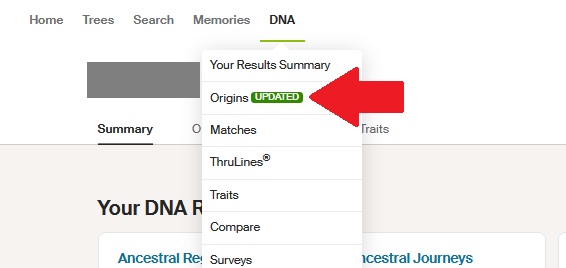
In order to see your updated Ancestry DNA results, all you have to do is login to your Ancestry account. On your main Ancestry homepage, you will see a "DNA" tab at the top of the screen.
Click on "DNA" and a dropdown menu will appear. Choose "Origins" to navigate to your DNA results. The results you see will be your updated results - you don't have to do anything special to see the update.
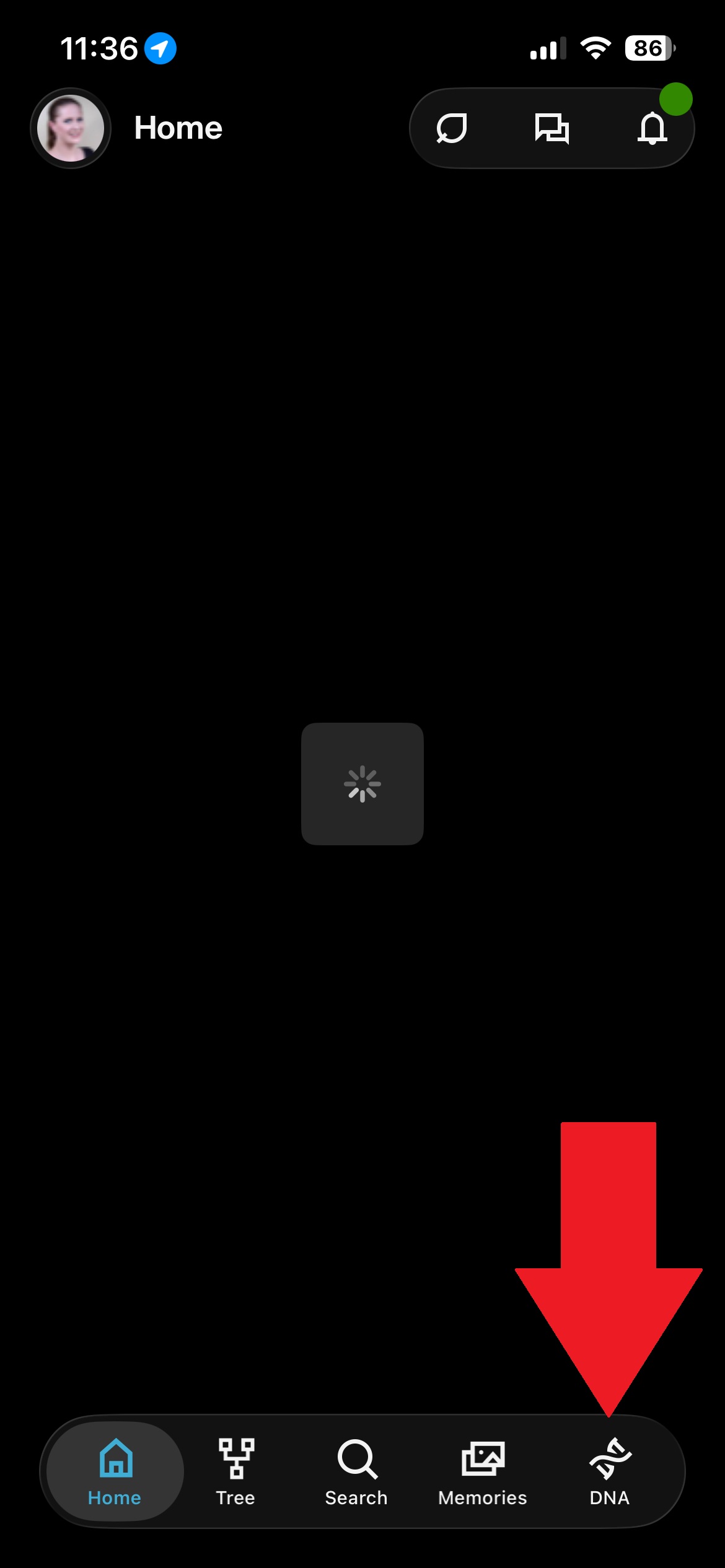
If you are using the Ancestry app on your phone, click on the DNA icon on the lower right side of the screen after you open the app.
The website or app will offer to take you on a tour of your updated results so you can see what has changed for your individual DNA results.
What are the biggest changes we see in this update?
The 2026 Ancestry update is especially exciting because this year we see what is essentially the biggest update ever for Ancestry results. As of October, 2026, our DNA now compared with 5035 ancestral regions and journeys, a 40% increase since the 2025 update.
Since there are so many more regions and journeys that can match our DNA, most people will see more specific results. For example, if you saw Southern Germanic Europe on your results last year, some of your ancestry might be identified as "Bavaria and Western Austria" on this update.
This is great detail that can help us learn even more about the precise regions where our ancestors likely lived.
Below, we learn more about may have changed with your updated results and why.
Much larger reference panel
The most important element for this new update is the size of the reference panel. Ancestry reports that the reference panel has grown from 185,000 to 295,000 samples. As a reminder, the reference panel is made up of DNA samples from people with deep ancestry in all of the regions for which Ancestry tests.
For those who love numbers, that's an almost 60% increase in DNA samples for the reference panel, which we really hope creates more accuracy with this update.
Ancestry was able to use data from this larger reference sample population in order to increase the number of regions (referred to in 2025 as "macro regions") from 146 to 302.
New algorithm for matching your DNA with regions
Along with a new and improved selection of regions that our DNA can be compared with, Ancestry has begun using a new algorithm for making the comparison. The result is, according to Ancestry, more refined and accurate results.
Prior to the 2026 update, an Ancestry customer's DNA was divided into many "windows", where each window represents DNA that came from a specific region. The regions on our DNA results were determined by comparing all of these small windows to models that were made by identifying where researchers found patterns in DNA that people from each region in the reference panel shared in common.
The new method still divides our DNA into all of these windows, but Ancestry now uses a direct-comparison method by comparing DNA in the windows directly with the DNA of people in reference sample's DNA in the same window. There are also a few other changes in the algorithm, including an updated method of using machine learning to "smoothing" out noise in our results and providing a higher level of accuracy.
Continent-specific changes in 2026 results
There were big changes in regions on almost every continent for this update. A few specifics are noted below.
Americas
The Ancestry 2026 update attempts to be more culturally sensitive in reported indigenous ancestry across North and South America. For example, the Indigenous Americas - Mexico was changed to 14 more detailed regions within the Mexican areas of North America.
The algorithm change that I mentioned before also makes it a little easier to identify more accurately the European ancestry that many indigenous North and South Americans also have.
For example, my husband has always shown about 5-6% European ancestry on his Ancestry results, with the remaining 94-95% reliably showing up as Native American or Indigenous Americas - Mexico. This update reports 95% Indigenous Americas ancestry for him.
The European regions matching the 5-6% have always changed, ranging from Ireland to Italy to Scotland.
With this update, he has 2% Spain and 2% Canary Islands, which are both likely more probable for him. There was still a 1% matching Belgium that will likely continue to be a mystery for us, like all of the other European regions that have come and gone on his results.
Africa
Ancestry has focused on ethnolinguistic groups in Africa for the 2026 update. This means that there is a reduction in "catch-all categories" (Ancestry's words) which have been changed to more specific groups of people who share both an ethnic and linguistic heritage.
India and South Asia
Indian and South Asian regions on Ancestry have increased with the 2026 update from 6 to 26, which will help everyone with ancestry from this part of the world understand more about where their ancestors actually lived.
Some examples of new regions added are Kerala, Tamil Nadu, Telangana, and Andhra Pradesh.
Europe
People with European ancestry will see many new regions on this update, especially in Central, Eastern, and Balkan Europe. This update also focused on teasing out French vs. French Canadian ancestry.
This is the one part of the update that I found to be a bit strange, since I do now see two regions belonging to French Canada on my grandmother's results: Acadia and Quebec. While I would not be surprised if some of her ancestors were French Canadian, I find it odd that this is the only region where European ancestry in North America is reported as a North American region.
Example of updated DNA results for the 2026 update
Below, I have included images from my 2025 Ancestry results which we can compare to my 2026 updated results. You will note that there is a lot more detail included in my Central and Eastern Europe regions, which now include the Carpathian Basin & Uplands, and Lesser Poland, among others.
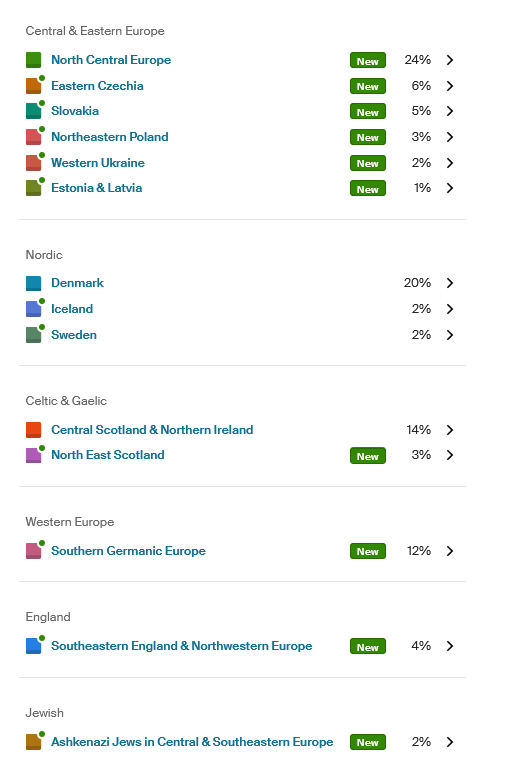
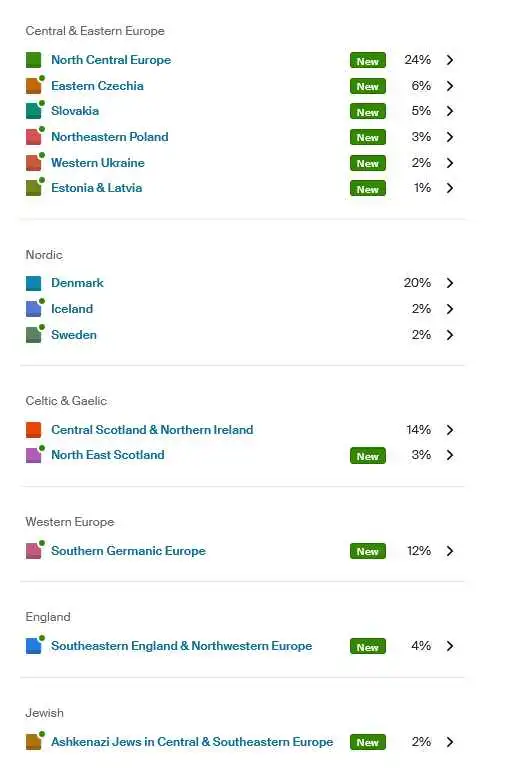
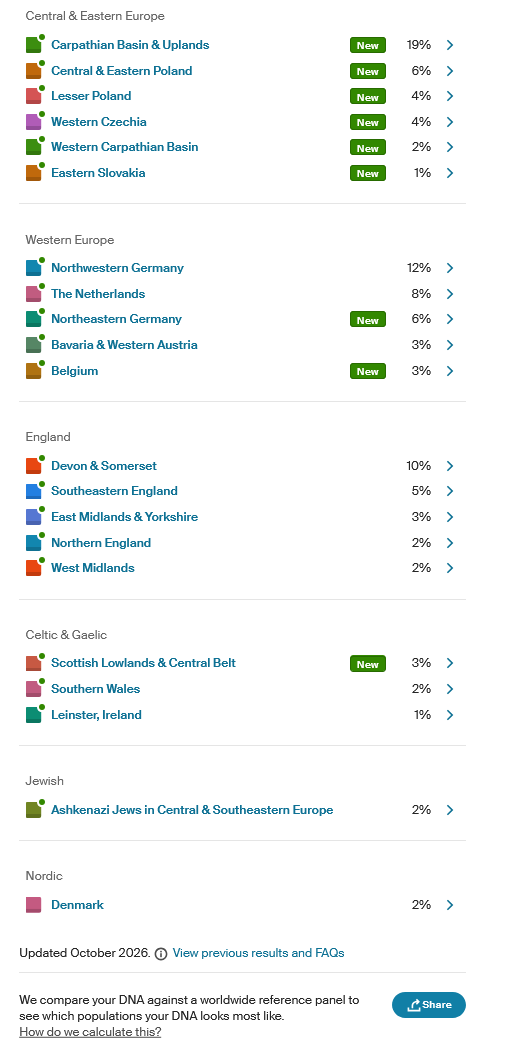
Some of my Eastern European ancestry has been elusive to me, since I still don't know anything for sure about the origins of one Polish great-great grandmother. I do think that these more specific regions can be of help to me, that is, after I tease out which ones might have been inherited from her and not my other Polish or Slovak ancestors.
One thing I noticed missing was Icelandic, which had shown up mysteriously in 2025. I knew that it was likely incorrect because both of my parents, as well as my grandmother, and several aunts and uncles have also tested. There was no Iceland on their results, and so I was expecting it to disappear (sadly! It would have been fun to have Icelandic ancestry.)
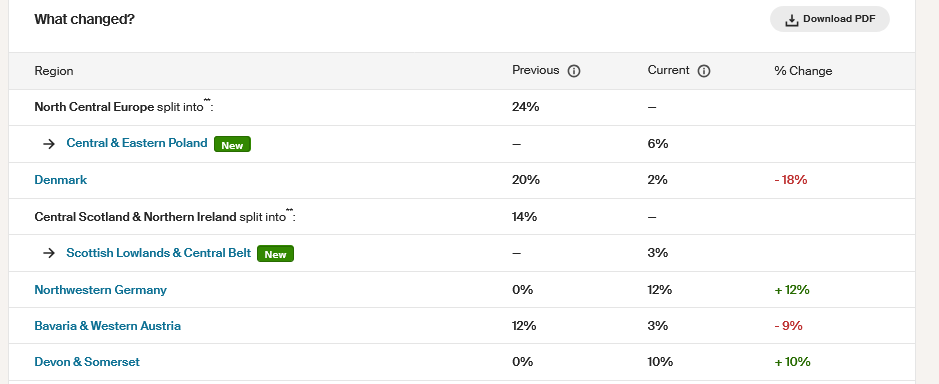
If you click on the little blue link under your results that says "View previous results and FAQs", you will be taken to an overview that compares your new results to the previous version. You will see what disappeared, and what was added, as well as what was split/changed with other regions.
Below is a small portion of mine so you can see what you might expect from yours.
Conclusion
I hope that you have found this post about the Ancestry 2026 update to be both interesting and helpful. I'm always excited to see my yearly Ancestry update, and I was not disappointed at all this year.
It would be great to hear your comments about your updated results in the discussion below. I hope you get a chance to explore your new results soon!
Thanks for reading today.